
Join our Telegram group and receive breaking and trending news updates directly on your phone.
Join for News Updates ✕Barcelona Exit European Super League Project, Leaving Real Madrid Behind
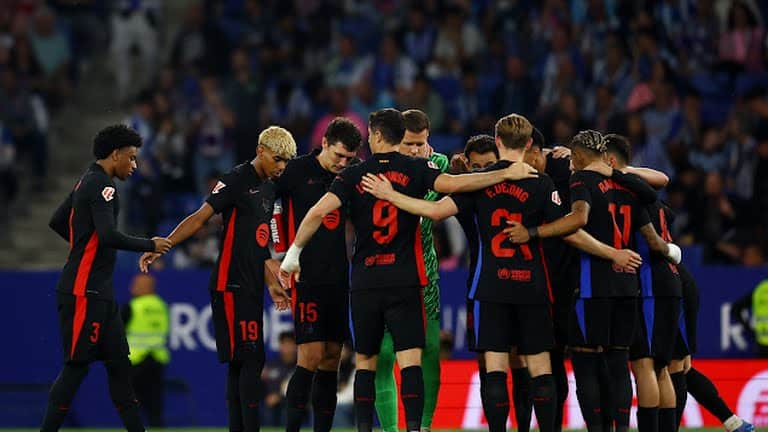
Barcelona have officially withdrawn from the European Super League (ESL), bringing an end to their involvement in the controversial breakaway project and leaving Real Madrid as the only club still committed to the proposal.
The reigning La Liga champions confirmed their decision in a short statement published on the club’s official website earlier today, February 7.
“FC Barcelona hereby announces that today it has formally notified the European Super League Company and the clubs involved in its withdrawal from the European Super League project,” the club said.
The European Super League was first unveiled in 2021, with 12 elite clubs across Europe announcing plans to create a rival competition to the Uefa Champions League.
The founding members included six Premier League sides: Manchester United, Manchester City, Liverpool, Chelsea, Arsenal and Tottenham Hotspur.
However, intense backlash from fans, football authorities, and political leaders forced all six English clubs to withdraw within 72 hours of the announcement. The swift collapse marked one of the most dramatic episodes in modern football governance.
Juventus later became the 10th club to formally exit the project in June 2024, leaving Barcelona and Real Madrid as the final two teams publicly backing the initiative.
In October 2025, Barcelona president Joan Laporta revealed the club’s intention to repair relations with UEFA and rejoin the European Football Clubs (EFC), formerly known as the European Clubs Association (ECA).
Barcelona, along with the other original Super League clubs, had been expelled from the organisation following the initial ESL announcement. Since then, the other 10 clubs have all been reinstated.
Real Madrid, meanwhile, remain firmly engaged in legal battles connected to the failed competition. The Spanish giants are pursuing what they describe as “substantial damages” from UEFA after a series of court rulings criticised the governing body’s response to the Super League plans.
In May 2024, Madrid’s commercial court ruled that UEFA and FIFA had engaged in anti-competitive practices and abused their dominant position, echoing a similar judgment by the European Court of Justice.
The legal action was initiated by A22 Sports Management, the company behind the ESL, against UEFA, FIFA, La Liga and the Spanish Football Federation.
Uefa has since amended its regulations regarding the approval of new competitions in the wake of the ESL fallout.
Following a further ruling by the Provincial Court of Madrid last October, the governing body stated the judgment did “not validate” the Super League project, “nor does it undermine UEFA’s current authorisation rules”.