
Join our Telegram group and receive breaking and trending news updates directly on your phone.
Join for News Updates ✕2027 Shift: From Protest Votes to Policy Scrutiny for Peter Obi
Tags: 2027 Shift: From Protest Votes to Policy Scrutiny for Peter Obi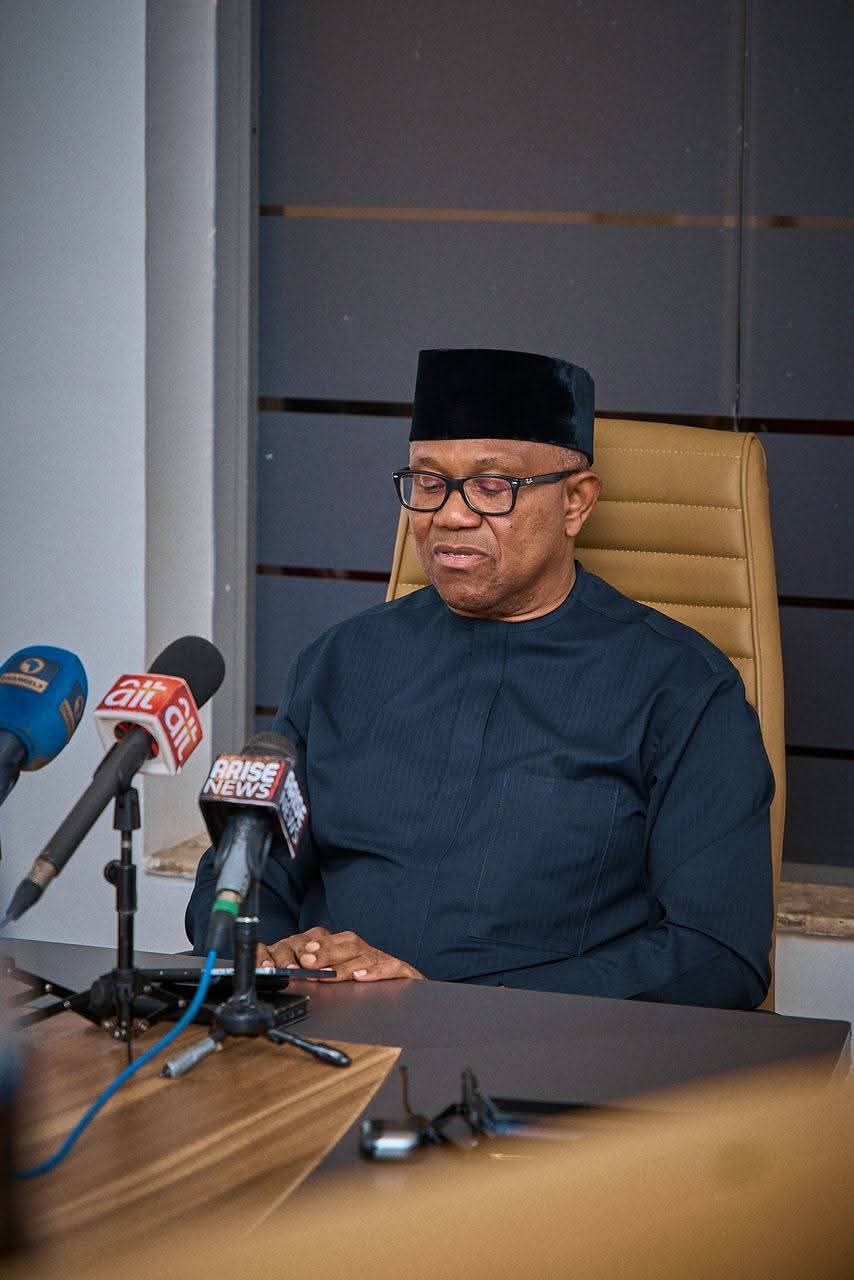
2027 Shift: From Protest Votes to Policy Scrutiny for Peter Obi
By Elempe Dele
Peter Obi is not fundamentally losing his core support base, but the political dynamics have shifted significantly since 2023. The electric, organic surge that propelled the “Obidient Movement” is facing new challenges.
In 2023, Obi capitalized on a powerful protest vote fueled by youth disillusionment, anti-establishment sentiment, and widespread frustration with the two dominant parties—the ruling All Progressives Congress,APC, and the Peoples Democratic Party PDP. He secured third place with approximately 6.1 million votes.
Social media mobilization was massive. Many voters viewed him as a frugal, capable alternative—a fresh face for a “New Nigeria.” With limited time and scrutiny during the campaign, deep dives into specific policies or governance capacity were minimal. The priority was “any alternative” to the status quo. This enabled strong inroads in urban centers, among the diaspora, and especially with young voters.
Today, the landscape has changed. Obi exited the Labour Party (LP), the platform that had given him a relatively uncontested run. He did not fully carry along key party figures or broader elements of the Obidient Movement. He then aligned with a “Coalition” that included politicians he had previously labeled part of the “Structure of Criminality.” This move alienated some supporters. The coalition evolved into the African Democratic Congress,ADC, but facing a likely primary challenge against Atiku Abubakar, Obi shifted to the National Democratic Congress, NDC, where he has now emerged as the presidential candidate.
These party maneuvers, often executed without extensive consultation with his grassroots base, have thinned his coalition. Some Obidient factions feel abandoned post-2023, perceiving a shift from movement politics to elite realignments.
However, party hopping alone does not fully explain the erosion. Greater media scrutiny and policy-focused interviews play a bigger role.
Obi now faces detailed questioning on economics, security, governance, and implementation. Critics argue his responses frequently appear vague, repetitive, and short on granular, actionable details or innovative ideas. He often references his Anambra governorship record—which remains disputed by some—but struggles to outline scalable national strategies. Key unanswered or underdeveloped areas include:
A precise fiscal plan amid high inflation and debt concerns. Concrete strategies to combat insecurity, especially in agriculture-dependent regions like the North. A detailed roadmap to an export-driven economy and achieving targets like 10,000 megawatts of electricity within four years. Alternatives to heavy external borrowing.
In 2023, lighter scrutiny and the “protest” mood favoured him as the anti-establishment choice. In 2026–2027, with more time and higher stakes, the focus has shifted to “How exactly will you deliver?” Obi has been one of the most interviewed candidates, yet performances in rigorous sessions have drawn mixed to critical reviews.
The Rufai Oseni “BlackBox” interview on Arise TV exemplified this. Obi leaned heavily on past state-level achievements and at times appeared evasive (e.g., “Nigerians are not asking that”). Comment sections and public discourse reflected divided opinions—supporters praised composure; detractors highlighted a lack of national-scale depth.
Persistent challenges like inflation, insecurity, and high living costs should theoretically favour opposition figures like Obi against President Tinubu. Yet voters increasingly demand credible alternatives beyond rhetoric, which has been the halmark of Obi, rather than substance. Slogans such as “Take Back Nigeria,” “New Nigeria is Possible,” or the newer “OK”, no longer excite voters as they once did. The public wants proof of competence and executable blueprints, not just promises or past records.
The 2023 protest wave has receded. Blind loyalty is fading as citizens prioritize specifics over charisma. For Obi to remain viable in 2027, he must evolve from protest symbol to detailed policy architect—demonstrating not just critique of the present, but a clear, feasible vision for governance. The era of “just change” is over; Nigerians are now interrogating capacity.