
Join our Telegram group and receive breaking and trending news updates directly on your phone.
Join for News Updates ✕Benue’s ₦100bn Infrastructure Loan Faces Scrutiny 283 Days After Approval
Tags: Benue ₦100 billion infrastructure loan, Benue capital projects, Benue development, Benue infrastructure projects, Benue State Government, Benue State news, Government transparency, Hyacinth Alia, Infrastructure financing, Loan utilisation, Nigeria public finance, Public accountability Nigeria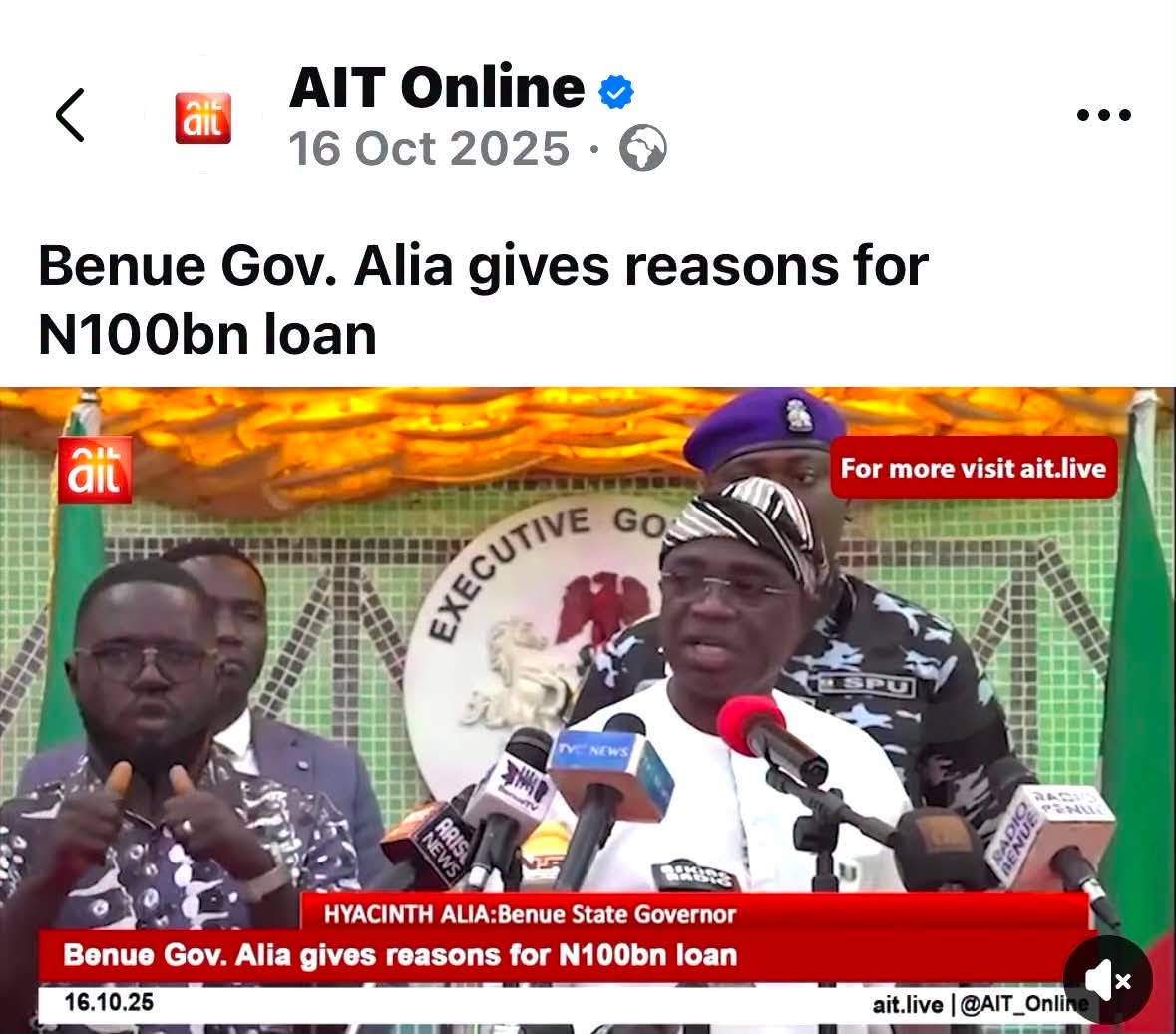
Benue’s ₦100bn Infrastructure Loan Faces Scrutiny 283 Days After Approval
Nearly ten months after the Benue State Government secured a ₦100 billion infrastructure loan, public attention is increasingly turning to how the funds have been utilised and what projects have been delivered.
The loan, obtained in October 2025 under the administration of Governor Hyacinth Alia, was presented as a major financing package intended to accelerate infrastructure development across the state.
https://voxnews.com.ng/benue-anyam-nyor-security-initiative-583-days-later/
As of 20 July 2026, exactly 283 days after the facility was secured, questions from some stakeholders and commentators continue to focus on the implementation of projects linked to the borrowing.
Calls for Detailed Project Updates
Those raising concerns argue that large-scale public borrowing should be accompanied by regular disclosures on how funds are allocated and spent.
Among the questions being asked are:
Which infrastructure projects have been financed with the ₦100 billion loan?
How much of the facility has been disbursed?
What proportion of the funds remains available?
Which contractors were awarded the projects?
What percentage of the projects has been completed?
Supporters of greater transparency say such information would enable taxpayers to assess the impact of one of the largest loans in the state’s history.
Accountability at the Centre of the Debate
The discussion has centred less on the decision to borrow and more on the need for accountability in the execution of projects funded through public debt.
A commentary circulating on social media used a pregnancy analogy to illustrate what the author described as the absence of visible outcomes nearly ten months after the loan was obtained.
The piece argues that residents are seeking evidence of completed or ongoing infrastructure rather than broad assurances about development.
While the analogy reflects the opinion of its author, it underscores wider calls for detailed public reporting on the use of the funds.
Importance of Public Disclosure
Public finance experts have long argued that governments can strengthen confidence by providing periodic implementation reports for major capital projects financed through borrowing.
Such reports typically include:
Lists of approved projects
Contract values and procurement details
Amounts released and spent
Stages of project completion
Expected delivery timelines
Analysts say making this information publicly available promotes transparency and enables citizens to monitor government performance.
Government Position
The Benue State Government has consistently stated that infrastructure development remains one of the priorities of Governor Hyacinth Alia’s administration.
However, this report has not independently verified the specific claims contained in the commentary regarding the status of projects financed through the ₦100 billion.
https://insiderpaper.com/france-sees-record-area-burned-by-wildfires-by-mid-july-monitor/
At the time of publication, no official statement responding directly to the questions highlighted in the commentary had been made available.
Should the state government release updated information on the loan’s utilisation, project implementation or expenditure, it would provide additional context for public assessment.
Why It Matters
Infrastructure borrowing is widely used by governments to finance roads, bridges, healthcare facilities, schools and other capital projects that may not be immediately affordable through annual budgets.
Transparency advocates argue that regular public updates on the implementation of such projects are essential to maintaining public trust and ensuring value for money.
For many residents, the central issue is not the borrowing itself but whether the promised infrastructure has translated into measurable improvements in communities across Benue State.