
Join our Telegram group and receive breaking and trending news updates directly on your phone.
Join for News Updates ✕Ebola Treatment Trial Begins in DR Congo Amid Bundibugyo Outbreak
Tags: Africa health, Bundibugyo Ebola, Clinical trial, DR Congo, Ebola, Ebola outbreak, Global health, Health News, Infectious diseases, INRB, Public health emergency, Tropical Medicine, Uganda, University of Oxford, WHO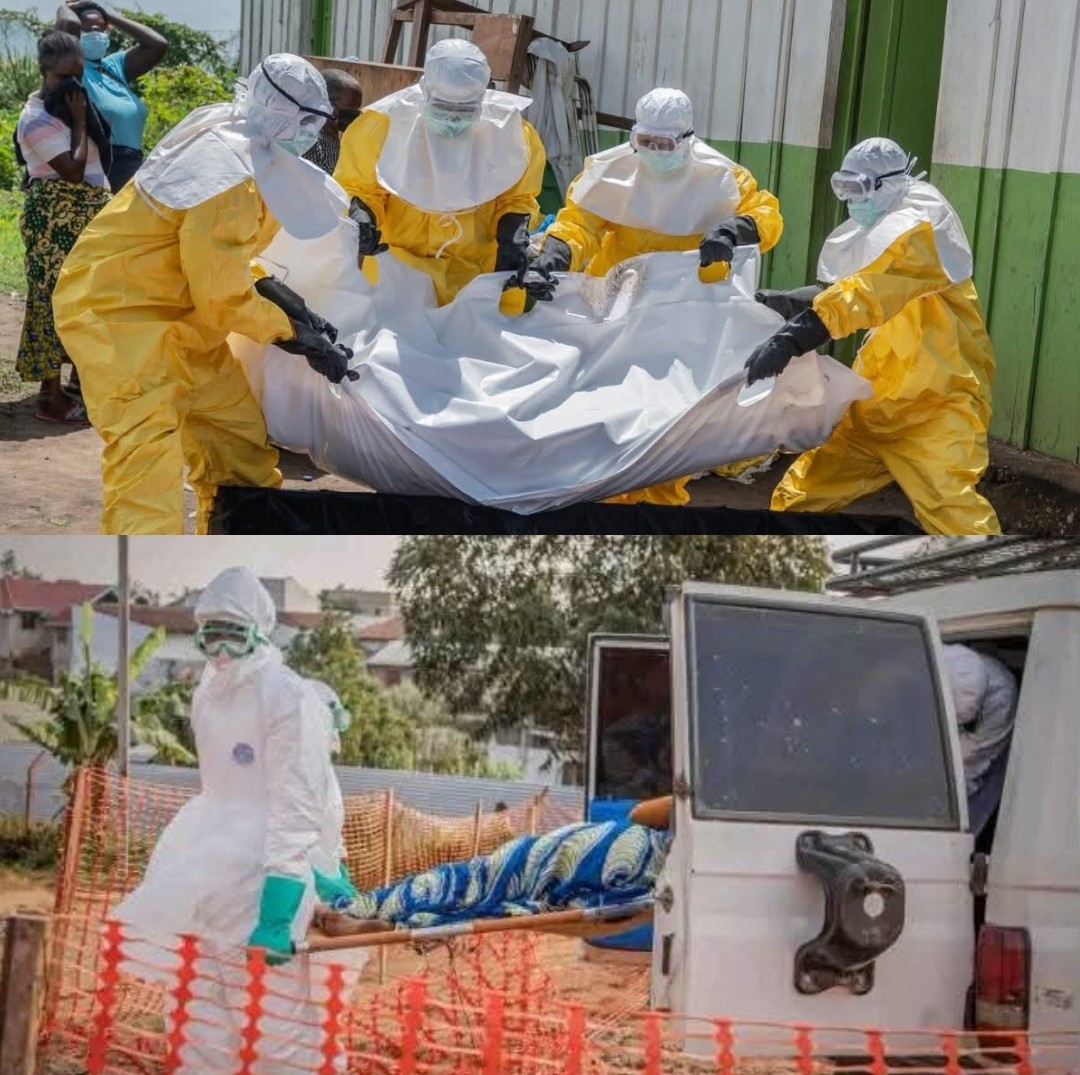
Ebola Treatment Trial Begins in DR Congo Amid Bundibugyo Outbreak
The World Health Organization (WHO) has launched a landmark clinical trial to evaluate two experimental treatments for the Bundibugyo strain of the Ebola virus in the Democratic Republic of Congo (DRC), marking a significant step in efforts to combat the ongoing outbreak in Central Africa.
According to the WHO, the first patient has already been enrolled in the study, which aims to determine whether the investigational therapies can improve survival rates and reduce the severity of illness caused by the rare but deadly virus.
The Bundibugyo strain is one of several species of the Ebola virus and, unlike the more common Zaire strain, currently has no approved vaccine or specific treatment.
Health experts say the new trial could pave the way for the development of lifesaving medical interventions if successful.
https://www.who.int/emergencies/disease-outbreak-news/item/2026-DON612
The clinical trial is sponsored by the World Health Organization and is being coordinated through a partnership involving the Institut National de Recherche Biomédicale (INRB) in the Democratic Republic of Congo, the Institute of Tropical Medicine in Belgium, and the University of Oxford in the United Kingdom.
Researchers will closely monitor patients receiving the experimental treatments to evaluate their safety and effectiveness. The study forms part of a broader international response to the outbreak that has affected communities in both the Democratic Republic of Congo and neighboring Uganda.

WHO officials stressed that conducting clinical trials during an active outbreak is essential to rapidly identify effective therapies while ensuring patients receive high-quality medical care.
Outbreak Declared Public Health Emergency
The Ebola outbreak, which began in May, has spread across parts of the Democratic Republic of Congo and Uganda. In response, the World Health Organization declared the situation a Public Health Emergency of International Concern (PHEIC), citing the risk of further regional transmission.
As of 30 June, WHO data recorded:
1,406 confirmed Ebola cases
301 suspected cases
438 deaths
Health authorities continue surveillance, contact tracing, laboratory testing, and community engagement to contain the virus and prevent additional infections.
No Approved Treatment Yet for Bundibugyo Ebola
Unlike outbreaks caused by the Zaire strain of Ebola—which has licensed vaccines and approved antibody treatments—the Bundibugyo strain remains without an approved vaccine or targeted therapy.
Medical experts say supportive care, including intravenous fluids, treatment of symptoms, and management of complications, remains the standard approach for infected patients. However, mortality rates remain high, highlighting the urgent need for effective treatments.
The new clinical trial is expected to provide critical scientific evidence that could help shape future global treatment guidelines for Bundibugyo Ebola.
The WHO, together with national governments and international research institutions, has intensified efforts to strengthen outbreak response measures, including:
Expanding laboratory testing capacity.
Improving infection prevention and control in healthcare facilities.
Enhancing surveillance and contact tracing.
Officials also emphasized that collaboration between scientists, governments, and humanitarian organizations is essential to containing the outbreak and reducing fatalities.
The launch of the treatment trial represents an important milestone in Ebola research. If the investigational therapies prove safe and effective, they could become the first approved treatments specifically targeting the Bundibugyo strain, offering new hope for patients and strengthening preparedness for future outbreaks.
Health experts continue to urge communities in affected areas to cooperate with public health authorities, report symptoms early, and follow infection prevention measures to limit the spread of the virus.