
Join our Telegram group and receive breaking and trending news updates directly on your phone.
Join for News Updates ✕Fani-Kayode Condemns Jingir’s Religious Rhetoric, Warns It Could Hurt Tinubu-Shettima’s 2027 Chances
Tags: 2027 Election, APC, Christian Muslim Relations, Femi Fani-Kayode, Kano, Muslim-Muslim Ticket, Nigeria Politics, Religious Tension, Shettima, Tinubu, Yahaya Jingir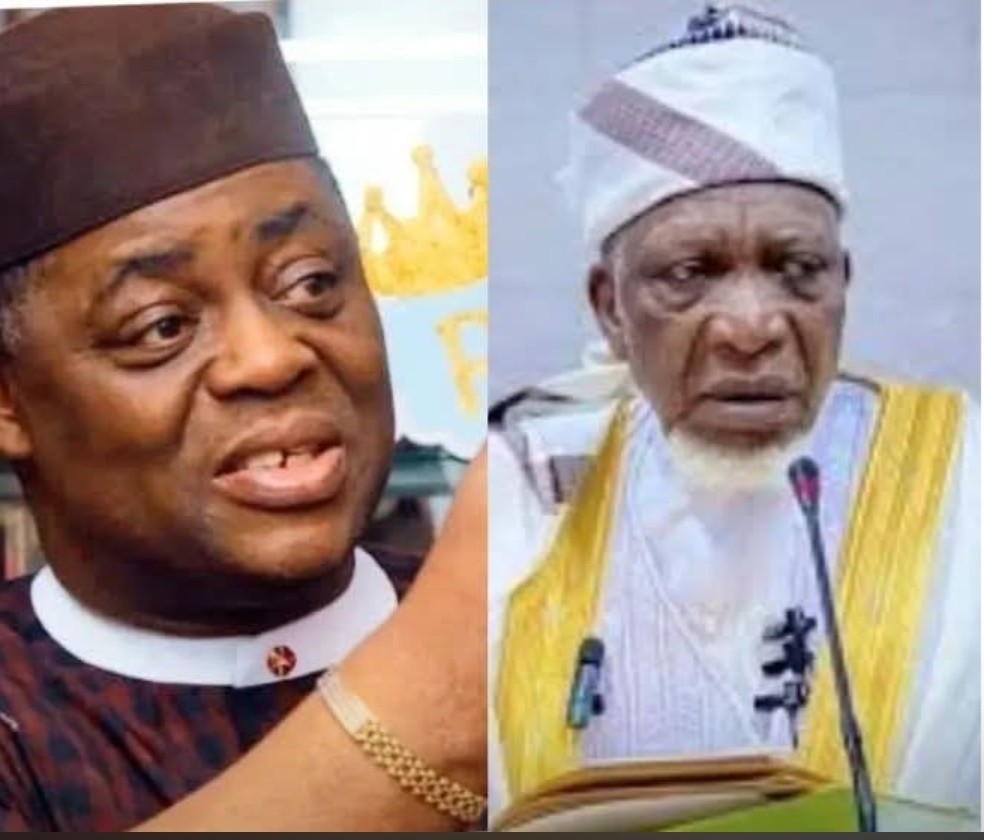
Ex-Minister Urges Sheikh to Apologise, Says Nigeria Belongs to Both Christians and Muslims
By Our Reporter
Former Minister of Aviation, Chief Femi Fani-Kayode, has condemned remarks attributed to Islamic cleric Sheikh Yahaya Jingir, warning that religiously divisive rhetoric could have serious consequences for Nigeria’s political stability and the electoral fortunes of the ruling All Progressives Congress (APC) ahead of the 2027 general elections.
Fani-Kayode, in a statement reacting to comments reportedly made by Jingir at an event in Kano, said he had received more than 100 calls and messages from concerned Christians and Muslims following the circulation of the cleric’s remarks.
https://voxnews.com.ng/pfipc-scandal-police-icpc-report-clears-gbajabiamila/
The former minister particularly expressed disappointment over what he described as the reaction of the Governor of Kano State to the remarks.
Fani-Kayode: We Must Not Play With Fire
Fani-Kayode said political leaders and religious figures should exercise restraint when discussing matters capable of deepening religious divisions in the country.
According to him, politics and political power are temporary, while matters of faith are much more profound.
He argued that Nigeria’s religious diversity makes it dangerous for influential figures to use language that could make Christians or Muslims feel excluded from the country.
“This divisive rhetoric has to stop and we should stop playing with fire,” Fani-Kayode stated.
He warned that such rhetoric could contribute to tension in a country where Christians and Muslims live side by side.
Says Comments Could Affect 2027 Elections
Fani-Kayode also linked the controversy to the 2027 presidential election, arguing that the APC would require support from both Christians and Muslims to retain power.
He said the comments attributed to Jingir could provide opposition parties with political ammunition and potentially damage the electoral prospects of the APC’s presidential ticket.
“What he has done is given the opposition something to hold on to and use against us and this is unfortunate,” he said.
Fani-Kayode stressed that his support for the Muslim-Muslim presidential ticket in 2023, and potentially in 2027, was based on the qualities and electoral capacity of the candidates rather than their religious identities.
‘Nigeria Is Neither a Muslim nor Christian Country’
The former minister rejected the characterization of Nigeria as exclusively belonging to one religious group.
He maintained that Nigeria is a secular, multi-religious country comprising Christians and Muslims and argued that religious diversity should be regarded as a source of strength rather than division.
Fani-Kayode further said that Nigerians should focus on policies, leadership qualities and the capacity of political candidates rather than making religion the central determinant of political choices.
He added that the fact that Nigeria currently has a Muslim-Muslim presidential ticket should not be interpreted as preventing the emergence of a Christian-Christian ticket in the future.
‘Jingir Does Not Speak for APC’
Fani-Kayode also sought to distance the APC from the comments attributed to Jingir.
According to him, the cleric does not represent the official position of the ruling party or the views of the majority of Nigerian Muslims.
“Jingir does not represent the feelings of the APC and neither does he speak for us. He only speaks for himself,” he stated.
He urged the cleric, if he chooses to participate in political discourse, to do so with restraint, respect and decorum while avoiding rhetoric capable of insulting or denigrating another person’s religious beliefs.
Calls for Respect Between Faiths
Fani-Kayode said the religious beliefs of both Christians and Muslims deserve respect, insisting that neither faith should be treated as inferior to the other.
He appealed to Nigerians to promote peaceful coexistence, mutual respect and understanding.
“We are all one before God and we should live in peace with one another always showing each other love and respect,” he said.
Calls for DSS Intervention
The former minister further called on the Department of State Services (DSS) to invite and caution Jingir over what he described as provocative and extremist rhetoric.
Fani-Kayode said such intervention would be necessary to prevent inflammatory statements from escalating existing tensions.
He also urged Jingir to apologise to Christians in Nigeria and adopt what he described as a more cautious and conciliatory approach to public statements.
Fani-Kayode’s 11-Point Position
He further outlined his position on the controversy. Among other things, he argued that:
Christians should not be described as infidels.
No Nigerian religious group should suggest that other Nigerians should leave the country.
Religious and political leaders should avoid rhetoric capable of creating division.
Nigeria should not be regarded as exclusively a Muslim or Christian country.
Nigeria’s multi-religious character should be preserved and respected.
His support for a Muslim-Muslim ticket is based on the candidates’ qualities, capacity and electoral strength, rather than their religion.
A Christian-Christian presidential ticket could emerge in the future.
Nigerians should focus on issues, policies and personalities rather than religious identity.
Jingir, in his view, does not represent the majority of Nigerian Muslims.
He accused the cleric’s comments of damaging the political prospects of President Bola Ahmed Tinubu and Vice President Kashim Shettima, while saying he suspected Jingir could be working against them.
He urged Jingir to apologise to Christians and embrace peace, civility and reconciliation.
Fani-Kayode said the overriding objective should be to preserve Nigeria’s unity and prevent political competition from degenerating into religious confrontation.