
Join our Telegram group and receive breaking and trending news updates directly on your phone.
Join for News Updates ✕The Snake, the Charms and the Spectacle: Inside the Exploitation of Spitting Cobras for Supernatural Claims
Tags: Africa Wildlife., Animal Welfare, Investigative Report, Mozambique Spitting Cobra, Public Safety, Snake Handling, Venomous Snakes, Wildlife Conservation, Wildlife Exploitation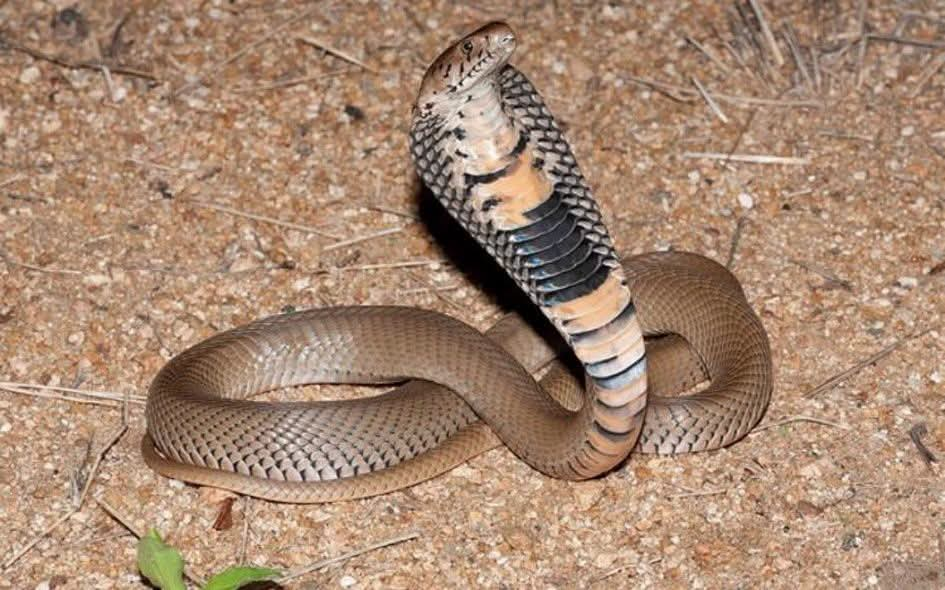
An investigative report on wildlife exploitation, public deception and the dangers of turning venomous snakes into instruments of fear and spectacle
A venomous snake, a collection of charms and a public display designed to inspire awe: the combination raises serious questions about animal welfare, public safety and the growing tendency to use wildlife as a prop in demonstrations of supposed supernatural power.
At the centre of the controversy is the Mozambique spitting cobra, a venomous African snake whose natural defensive abilities are often misunderstood and whose presence in a public spectacle can expose both the animal and its handlers to significant danger.
The concern is not simply about the presence of a snake. It is about what happens when a wild animal is removed from its natural environment, displayed before a crowd and presented in a manner that encourages people to associate it with mystical influence rather than its biological characteristics.
https://voxnews.com.ng/ukwuani-peace-cup-unites-10-wards-through-football/
A Wild Animal Turned into a Tool of Spectacle
The Mozambique spitting cobra (Naja mossambica) is a venomous snake found across parts of eastern and southern Africa. It is known for its ability to spit venom defensively, often directing it towards the eyes of a perceived threat. Its venom can also cause serious injury through a bite.
Like other wild animals, the cobra relies on defensive behaviour to survive. When confronted by people, surrounded by noise or subjected to repeated handling, it may experience considerable stress and respond unpredictably.
Displaying such an animal alongside charms or ritual objects can create an impression that the handler possesses extraordinary powers. However, the spectacle itself provides no scientific evidence of supernatural ability.
A snake’s behaviour is better understood through its biology, environment and response to perceived threats than through claims about mystical control.
The distinction matters because public displays can shape how communities understand wildlife, particularly when the audience has limited access to reliable information about venomous snakes.
Have the Snake’s Fangs Been Removed?
One of the most troubling allegations surrounding the display is that the cobra may have had its fangs removed to make it appear harmless.
This claim requires independent verification. Without a close veterinary examination or reliable documentation, it would be premature to conclude that the animal has been defanged.
Nevertheless, the possibility raises important animal-welfare questions.
Venomous snakes subjected to invasive procedures intended to make them easier to handle may suffer injuries, infection and other complications. Removing a snake’s fangs is not a reliable or humane way to make it safe.
The suggestion that the fangs will simply grow back also requires qualification. Snake fangs are periodically replaced, and replacement fangs may develop, but the outcome depends on the nature of the procedure and the condition of the animal’s dental structures. It cannot be assumed that every removed fang will regrow normally.
Even if a handler claims the animal has been rendered harmless, that assertion should never be accepted as a guarantee of safety.
A Mozambique spitting cobra remains a potentially dangerous wild animal. Its ability to bite, the possibility of replacement fangs and the risks associated with close contact make unsupervised handling particularly hazardous.
The Hidden Cost of Public Entertainment
Beyond the question of fangs lies a broader concern: the welfare of an animal being used to attract attention, command respect or reinforce a handler’s public image.
A crowd gathering around a venomous snake can create an intimidating environment for an animal that naturally responds to perceived danger. Noise, sudden movements, repeated touching and attempts to provoke a reaction may intensify the stress.
The snake cannot explain its condition to spectators. Its apparent stillness may be mistaken for calmness, submission or supernatural control, when it may instead reflect defensive behaviour, exhaustion or an attempt to avoid confrontation.
Without direct observation and expert assessment, however, the animal’s precise emotional or physical condition cannot be established from a photograph or description alone.
What can be established is that wild animals should not be subjected to unnecessary handling or distress merely to produce a dramatic public display.
When Wildlife Becomes Evidence of Supposed Supernatural Power
The association between snakes, charms and mystical authority is not new. Across different societies, animals have featured in cultural practices, folklore and spiritual narratives.
https://guardian.ng/features/health/7-things-you-may-not-know-about-ebola-virus/
Cultural beliefs deserve to be discussed with sensitivity. But respect for cultural expression should not prevent legitimate questions about deception, animal welfare and public safety.
When a handler presents a venomous snake alongside charms in a way that encourages spectators to believe the animal proves supernatural powers, observers should ask what evidence supports the claim.
The presence of a snake does not establish that its handler possesses mystical abilities. Nor does the animal’s failure to attack prove that it has been spiritually subdued.
Snakes may remain still for a variety of reasons, including temperature, stress, defensive responses and individual behaviour. Their reactions are not reliable tests of supernatural claims.
The central investigative question is therefore not whether spectators are impressed, but whether the circumstances of the display have been accurately represented.
Who owns the snake? Where did it come from? Was it captured from the wild or obtained through a lawful, responsible source? Has it received appropriate veterinary care? What measures protect the public? And is the animal being handled by someone with the necessary training and authorisation?
Those questions demand evidence rather than speculation.
Lessons From Fatal Snake-Handling Incidents
The concern also recalls reports of a traditional dancer who died while handling a black mamba in Zambia’s Eastern Province. The circumstances of any particular incident should be verified through credible reporting and official accounts before a definitive comparison is made.
The wider lesson, however, is clear: handling venomous snakes before an audience can have fatal consequences.
A black mamba and a Mozambique spitting cobra are different species, with different behaviours and venom characteristics. Both, however, can pose serious risks when people underestimate their capabilities or treat them as performance props.
A handler’s apparent confidence does not eliminate biological danger. Neither does a history of successful performances guarantee that the next encounter will end safely.
Public demonstrations involving venomous snakes can also endanger spectators, particularly where there are no secure barriers, trained wildlife professionals or emergency arrangements.
The risk extends beyond the person holding the animal.
What an Independent Investigation Should Establish
To move beyond public outrage and establish the facts, wildlife authorities, veterinarians and responsible journalists should examine several critical issues.
First, the snake’s origin and ownership. Authorities should establish where the cobra was obtained, whether its possession complies with applicable wildlife laws and whether the handler has the required permits.
Second, the animal’s physical condition. A qualified reptile veterinarian should determine whether the snake has suffered injuries, whether its fangs have been removed or damaged, and whether it shows signs of neglect or other health problems.
Third, the conditions of the display. Investigators should establish whether the snake was exposed to excessive noise, rough handling, deliberate provocation or unsafe crowd conditions.
Fourth, the handler’s claims. Any suggestion that the animal demonstrates supernatural abilities should be examined critically, with a clear distinction between documented facts, personal beliefs and unsupported assertions.
Finally, public-safety arrangements. Authorities should assess whether the display created an unacceptable risk of bites, venom exposure or other injuries and whether the event complied with applicable safety requirements.
These inquiries would help determine whether the incident involved unlawful wildlife possession, animal mistreatment, unsafe handling or simply a display whose meaning has been misunderstood.
Until such evidence is available, allegations about the snake’s treatment or the handler’s intentions should remain allegations rather than established findings.
Protecting Snakes Begins With Understanding Them
Snakes play important ecological roles, including helping to regulate populations of rodents and other small animals. They are also frequently killed because of fear, misinformation and mistaken beliefs about their behaviour.
The Mozambique spitting cobra is not a charm, a supernatural instrument or a measure of its handler’s spiritual authority. It is a wild animal equipped with biological adaptations that help it survive.
That does not mean venomous snakes should be approached casually or kept without appropriate expertise. Public education must emphasise safe distances, professional wildlife management and the need to avoid handling or provoking these animals.
Where a snake is being kept or displayed in potentially dangerous or inhumane conditions, the appropriate response is to involve qualified wildlife professionals and relevant authorities rather than attempt to seize or handle it personally.
Conclusion: Beyond the Spectacle
The real test of responsible wildlife interaction is not how dramatically a person can display a dangerous animal, but whether that animal’s welfare and the safety of the public are protected.
A cobra surrounded by charms may attract attention, provoke fear or inspire admiration. None of those reactions establishes supernatural power.
What deserves scrutiny is the treatment of the animal, the accuracy of the claims made about it and the risks imposed on everyone involved.
If the display is being used to mislead the public, that deserves evidence-based scrutiny. If the snake is being mistreated, its welfare deserves urgent attention. And if the handling places people in danger, the relevant authorities should intervene.
The objective should not be to condemn snakes because of the way people use them. It should be to understand these animals, challenge misinformation and prevent their exploitation for spectacle.
A wild animal’s survival should never become the price of another person’s performance.