


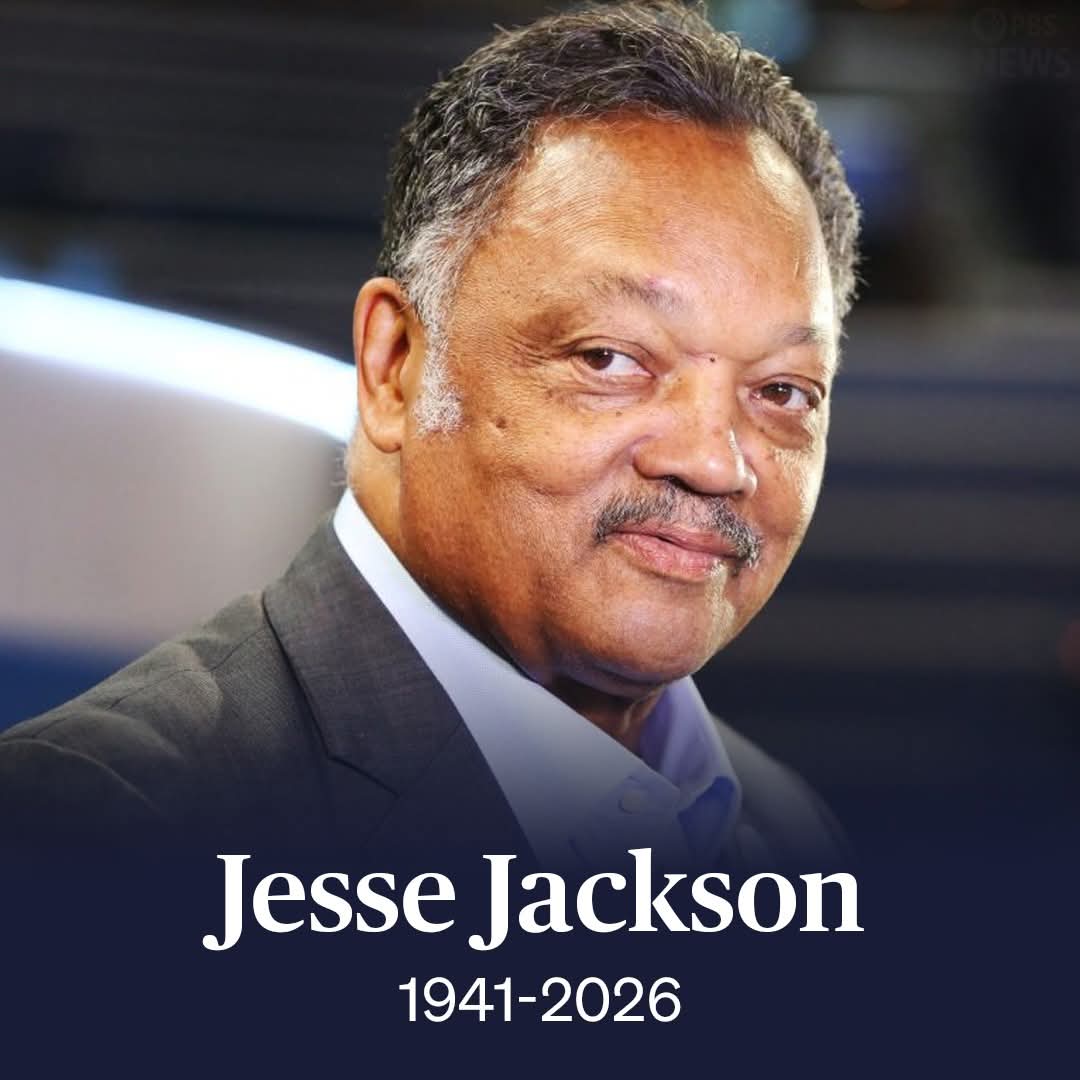
American Civil Rights Icon, Jesse Jackson Dies at 84
…Renowned US Activist Succumbs Peacefully in Sleep, Family Mourns Loss of Rainbow PUSH Coalition Founder
The global civil rights community has been thrown into mourning following the death of one of its most enduring icons, the Reverend Jesse Jackson, who passed away at the age of 84 after a lifetime of tireless advocacy for racial justice, equality, and social change in the United States.
A towering figure in the American civil rights movement of the 1960s, Jackson breathed his last peacefully in his sleep on Tuesday morning, surrounded by his loving family and close friends, marking the end of an era for activists who drew inspiration from his unyielding commitment to the downtrodden and his groundbreaking efforts to bridge divides across racial, economic, and political lines in a nation long plagued by systemic inequalities.
Born on October 8, 1941, in Greenville, South Carolina, Jackson rose from humble beginnings to become a Baptist minister, presidential candidate, and founder of the Rainbow PUSH Coalition, an organisation that championed the causes of minorities, women, labour unions, and the poor, earning him international acclaim and two unsuccessful bids for the Democratic presidential nomination in 1984 and 1988, where he galvanised unprecedented support from diverse voter blocs and reshaped the contours of American progressive politics.
Trump Border Tsar Tom Homan Announces End To Minnesota Immigration Operation
In a heartfelt statement announcing his passing, Jackson’s family expressed profound grief while celebrating his monumental legacy, saying:
“It is with profound sadness that we share the news of the passing of Civil Rights leader and founder of the Rainbow PUSH Coalition, the Honorable Reverend Jesse Louis Jackson, Sr. He died peacefully on Tuesday morning, surrounded by his loved ones.”
The announcement, which quickly reverberated across social media and news outlets worldwide, underscored the personal nature of his departure and invited reflections on a life dedicated to confronting injustice, from his early days marching alongside Dr. Martin Luther King Jr. in Memphis, where he was present at the civil rights leader’s assassination in 1968, to his later roles as a diplomat-at-large who negotiated the release of hostages and political prisoners in hotspots like Syria, Iraq, and Cuba, demonstrating a fearless diplomacy that transcended borders and earned him the Presidential Medal of Freedom in 2000, even as he battled Parkinson’s disease in his final years without ever dimming his voice for the oppressed.
Tributes have begun pouring in from world leaders, civil rights organisations, and ordinary citizens alike, with many hailing Jackson not only as a product of the turbulent 1960s but as a prophet whose vision of a “Rainbow Coalition” uniting disparate groups against poverty and discrimination remains profoundly relevant amid today’s resurgent debates on race, equity, and democracy in the United States and beyond.
His death comes at a time when echoes of the civil rights struggles he helped define continue to resonate globally, including in Nigeria, where activists have long looked to figures like Jackson for lessons in non-violent resistance and coalition-building against entrenched power structures, leaving an indelible mark on generations who will forever remember him as the indomitable “Reverend” who turned sermons into strategies for liberation.


Comments are closed