
Join our Telegram group and receive breaking and trending news updates directly on your phone.
Join for News Updates ✕From Motor Parks to Modern Terminals: Makinde’s Seven-Year Transport Intervention in Oyo
Tags: Ibadan transport, Iwo Road Bus Terminal, Makinde, Omituntun Mass Transit, Oyo State, Oyo transport reforms, PMS Oyo, Seyi Makinde projects, transport infrastructure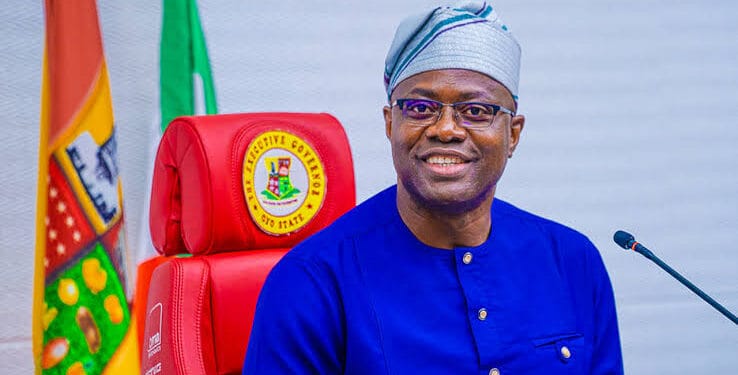
By Abubakar Yusuf
The transformation of Oyo State’s transportation landscape has been one of the visible components of Governor Seyi Makinde’s administration since 2019.
For decades, transportation in major urban centres across Nigeria has been associated with congestion, informal roadside operations and inadequate passenger facilities. In Oyo State, the government has responded with a combination of transport regulation, modern terminals, mass-transit investment and partnerships with private-sector operators.
A major component of this strategy is the Park Management System, which the state government says was introduced to bring greater order, accountability and efficiency to the transport sector.
The administration has also invested in dedicated bus terminals, with the Iwo Road facility becoming one of the most prominent examples. The Ibadan Central Bus Terminal provides structured spaces for passenger movement and commercial transport operations.
According to the Oyo State Government, the administration constructed four bus terminals at Iwo Road, Challenge and Ojoo and procured 109 buses for its Omituntun Mass Transit programme.
Beyond infrastructure, the reforms are intended to improve the relationship between transport operators, commuters and government.
A properly regulated transport environment can help commuters identify authorised operators, improve the coordination of passenger movement and provide government with better mechanisms for monitoring the sector.
The current Oyo State Park Management System also describes the use of digital tools, including security verification mechanisms, as part of efforts to improve passenger safety and operational efficiency.
The importance of transportation to Oyo State cannot be overstated. Ibadan’s location and its connection to Lagos and other parts of the South-West make efficient transportation essential to commerce and daily economic activity.
A more structured transport network can therefore support businesses, workers, students, traders and other residents whose activities depend on reliable movement.
The administration’s approach has also included public-private participation in infrastructure development. Oyo’s transport policy identifies private-sector financing and partnerships as part of efforts to expand infrastructure beyond what public resources alone can provide.
The next challenge is sustainability. Modern terminals must be maintained, transport regulations must be consistently enforced, and improvements must reach communities outside the state capital.
https://nairametrics.com/2026/09/28/dangotes-kenya-refinery-to-generate-1000mw-double-lagos-plant/
Makinde’s emergence as an APM presidential candidate has also brought renewed attention to his record in Oyo. His supporters may cite the state’s infrastructure and transport interventions as examples of his approach to governance, while the broader public can assess the projects based on their measurable impact on residents.
Ultimately, the lasting test of any transport reform is whether commuters experience safer, more accessible, predictable and efficient transportation.
Written BY ABUBAKAR YUSUF, APM, NPS.