
Join our Telegram group and receive breaking and trending news updates directly on your phone.
Join for News Updates ✕JRB Road Revolution: How Jimoh Rauf Badamasi Is Changing Nigeria’s Road Construction Landscape
Tags: Abuja-Keffi Road, Concrete Pavement, Federal Ministry of Works, Infrastructure, Jimoh Rauf Badamasi, JRB Construction, Nigeria Roads, Oyo-Ogbomoso Road, Road Construction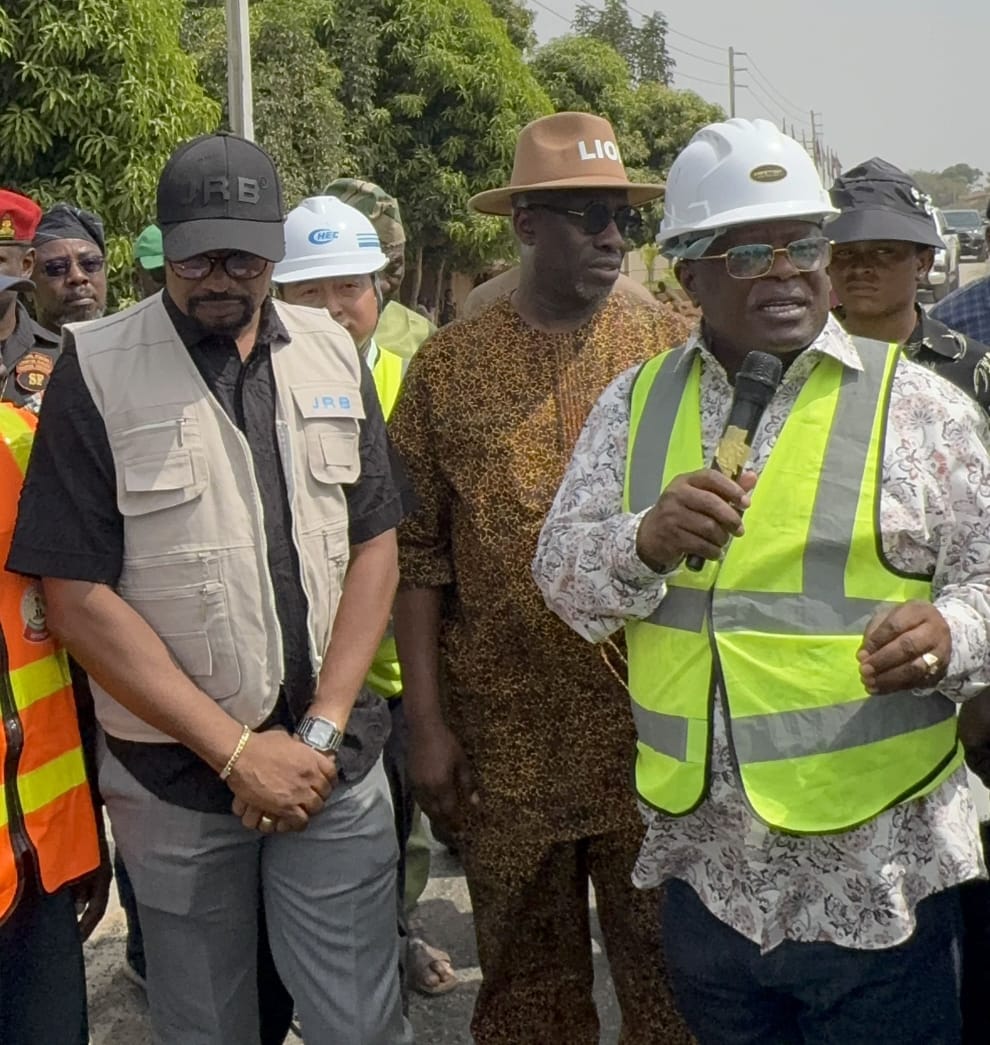
By Abubakar Yusuf
Nigeria’s road infrastructure landscape is witnessing a new phase of indigenous participation, with JRB Construction Company, led by Jimoh Rauf Badamasi, increasingly associated with major road rehabilitation and concrete-pavement projects.
Over time, JRB Construction has expanded its presence in the Nigerian construction sector, undertaking road projects across different parts of the country. The company’s growing involvement in federal road projects has also placed renewed attention on the capacity of indigenous contractors to deliver large-scale infrastructure.
One of the projects that has brought JRB Construction into wider public attention is the Oyo–Ogbomoso section of the Ibadan–Ilorin highway.
https://voxnews.com.ng/erico-kogi-east-apc-grassroots-mobilisation-2027/
The Federal Government awarded JRB Construction the contract to complete the outstanding portion of the project after the previous contract was terminated. Reports at the time said the company mobilised to site and committed to completing the remaining work within the approved timeframe.
The company has also been involved in major road interventions around the Federal Capital Territory and adjoining areas.
In January 2026, the Minister of Works, Dave Umahi, commended JRB Construction during an inspection of the Abuja–Keffi dual carriageway project, while noting that some areas still required further attention. The company had been awarded the emergency reconstruction contract in October 2025.
Concrete Pavement and Road Rehabilitation
Beyond conventional asphalt construction, concrete pavement technology is becoming an increasingly visible feature of Nigeria’s road infrastructure strategy.
The Federal Ministry of Works announced in May 2026 that JRB Construction Company was awarded the dualisation of the Ibadan–Ijebu Ode Road, a 114.5-kilometre project measured in single-carriageway equivalent, to be executed using Continuously Reinforced Concrete Pavement (CRCP) technology.
This development reflects the Federal Government’s wider push to explore durable and sustainable pavement technologies in major road projects.
For Badamasi and his team, the growing portfolio of projects represents an opportunity for indigenous construction companies to demonstrate their capacity in an industry historically dominated by large multinational firms.
FCT Corridors and the Search for Safer Roads
The Federal Capital Territory and its surrounding corridors have remained particularly important to Nigeria’s road transportation network because of the volume of commuters, commercial vehicles and articulated trucks using the routes daily.
Road corridors linking Abuja with communities and states in the North Central region experience intense traffic pressure, making rehabilitation, drainage, shoulders and pavement durability important components of road safety.
JRB’s reported interventions on sections around Abuja and adjoining corridors have therefore attracted public attention, particularly at a time when the Federal Government is placing emphasis on road rehabilitation and infrastructure renewal.
The company had earlier undertaken remedial works around the Anagada, Tungan Maje and Zuba axis, according to reports on its projects.
A New Chapter for Indigenous Contractors
The emergence of JRB Construction on major federal road projects also fits into the Federal Government’s stated policy of supporting indigenous contractors.
Minister of Works Dave Umahi has previously said President Bola Ahmed Tinubu directed the ministry to empower and support indigenous construction companies. During an inspection of the Oyo–Ogbomoso project in 2025, Umahi specifically praised JRB’s work and described the company as an example of indigenous capacity in the construction sector.
https://guardian.ng/news/nysc-abduction-adebayo-demands-rescue-security-overhaul/
For Nigeria, the significance goes beyond individual contracts.
A stronger indigenous construction industry can potentially create employment, develop local technical expertise, retain more value within the economy and improve the country’s capacity to maintain critical infrastructure.
The Road Ahead
While road construction projects must ultimately be judged by engineering standards, durability, safety, value for money and long-term performance, the increasing participation of Nigerian-owned construction companies in major federal projects represents an important development.
JRB Construction’s expanding project portfolio places responsibility on the company to maintain quality, meet contractual obligations and ensure that completed roads provide lasting value to Nigerians.
For millions of motorists and commuters, the expectation remains straightforward: roads that are durable, accessible and safe, with construction and rehabilitation projects completed to approved standards.
If the current emphasis on concrete pavement, rehabilitation and indigenous participation is sustained with effective supervision and quality control, Nigeria’s road infrastructure could enter a new phase in which durability and long-term value receive greater attention.
For Jimoh Rauf Badamasi and JRB Construction, the coming years will therefore provide an even greater opportunity to demonstrate what Nigerian-owned construction companies can achieve on the nation’s critical road network.