
Join our Telegram group and receive breaking and trending news updates directly on your phone.
Join for News Updates ✕“We Muslims Are More Than Christians in Plateau, Yet We Are Being Marginalised” — Islamic Cleric, Sheikh Yahaya Jingir
Tags: Christians in Plateau, Islamic cleric, Muslims in Plateau, Nigeria religion, Plateau politics, Plateau State, religious marginalisation, Sheikh Yahaya Jingir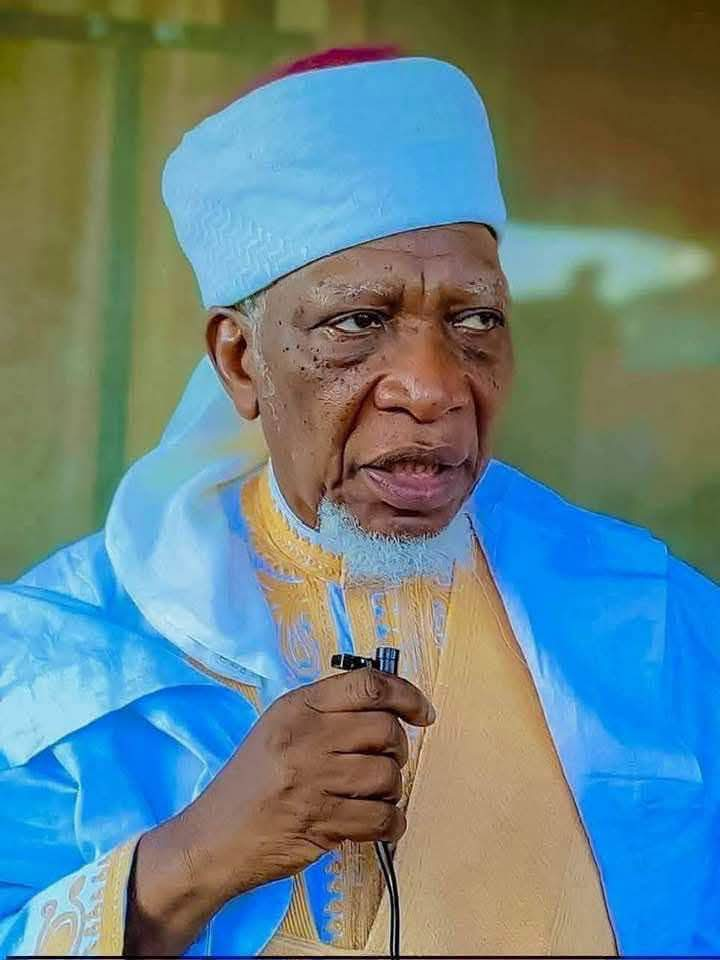
Religious rhetoric should not deepen divisions in Plateau, says concerned stakeholder
A fresh controversy over religion and political representation in Plateau State has emerged following remarks attributed to Islamic cleric Sheikh Sani Yahaya Jingir, who alleged stated that Muslims are being marginalised because Christians occupy several key government and security positions in the state.
Yahaya Jingir was quoted as saying:
“In Plateau, the Commissioner of Police is a Christian, the Governor and Deputy Governor are Christians, the DSS State Coordinator is a Christian, and the GOC is a Christian. Yet, we Muslims are more than Christians in the state. They are marginalising us in this state.”
The remarks have generated debate over religious representation, political participation and the role of faith in public appointments.
While concerns about fair representation can legitimately be raised by any community, the claim that Muslims constitute a numerical majority in Plateau should not be treated as an established demographic fact without reliable official data.
Nigeria has not conducted a recent nationwide census that establishes the religious composition of its population, making competing claims about religious population figures difficult to verify.
Representation Should Follow Democratic Participation
Critics of Jingir’s position argue that political and public appointments should not be determined primarily by religious identity.
They maintain that where citizens believe they are underrepresented, the democratic response should include political participation, voter registration, elections, engagement with government institutions and lawful advocacy rather than appeals based on religious numerical strength.
https://voxnews.com.ng/toto-apc-crisis-balarabe-appeals-for-unity-plans-gadabuke-visit/
If a community believes it deserves greater political representation, its concerns can be presented through democratic and constitutional channels.
Elections, rather than religious headcounts, should remain an important avenue through which citizens determine who represents them.
Concerns Over Religious Rhetoric
The controversy is particularly sensitive because Plateau State has experienced prolonged ethno-religious and communal conflicts.
Historical studies of Plateau’s conflicts have documented how competition over political and security institutions has sometimes acquired ethnic and religious dimensions.
Against that background, statements that frame political representation primarily through Christian-versus-Muslim identities can potentially deepen suspicion between communities.
This is why religious and political leaders have a responsibility to exercise restraint when discussing sensitive issues involving faith, power and representation.
The issue should not be whether Christians or Muslims collectively control Plateau State. The more important question should be whether government institutions serve all citizens fairly, regardless of their religion or ethnic background.
Government Must Ensure Fairness Without Religious Bias
There are also longstanding public discussions about the religious composition of security leadership in Plateau State. For example, a recent Blueprint report raised concerns about what it described as an imbalance in the state’s security structure.
Such claims should be examined on the basis of verifiable appointments, institutional rules and evidence of actual conduct—not simply the religious identity of individual officeholders.
A Christian occupying a public office does not automatically mean Christians are being favoured, just as the appointment of a Muslim does not automatically establish that Muslims are receiving preferential treatment.
What matters is whether officials discharge their responsibilities impartially and whether citizens receive equal protection under the law.
Religious Leaders Must Consider the Consequences of Their Words
Sheikh Jingir, as a prominent religious leader, has a substantial public platform. His views on political participation and religious representation are therefore likely to attract considerable attention.
Recent reports show that Jingir has continued to defend his position on Muslim political mobilisation and the Muslim-Muslim ticket, despite criticism from some quarters.
However, political participation should not become a contest in which Nigerians are encouraged to see one religious community as an opponent of another.
Muslims and Christians are citizens of the same country and residents of the same state. Their security, economic wellbeing and future are interconnected.
Plateau Needs Dialogue, Not Division
Rather than allowing religious identity to become the basis for political confrontation, stakeholders should promote dialogue and address specific grievances with evidence.
If there are genuine disparities in appointments, those disparities should be identified and discussed transparently.
If there are allegations of discrimination, the appropriate institutions should investigate them.
And if citizens believe government policies are unfair, they should be able to challenge those policies through lawful and democratic means.
What Plateau State does not need is rhetoric capable of increasing mistrust between communities already living with the consequences of years of conflict.
The Plateau State Government and the Federal Government should therefore continue to promote equal treatment, inclusive governance and impartial security arrangements for all citizens.
https://guardian.ng/news/bandits-abduct-five-in-zamfara-kidnap-couple-in-kwara/
No religious community should be made to feel like an outsider in its own country, and no community should be encouraged to view another faith as an enemy.
PLATEAU STATE NEEDS PEACE, NOT RELIGIOUS TENSION. NIGERIA NEEDS UNITY, NOT DIVISION.
Government, political leaders, religious authorities and community stakeholders must work together to protect the lives, rights and dignity of every citizen, irrespective of religious affiliation.