When Propaganda Meets Facts: The Uncomfortable Lessons from Bwala’s Al Jazeera Interview
In Nigeria’s often raucous political media landscape, surviving a high-stakes interview has traditionally hinged less on the solidity of facts and more on raw stamina, unshakeable confidence, and the sheer volume of one’s voice overpowering the opponent.
Politicians and their spokespersons have mastered this art at home, where holding the floor long enough often triggers a cascade of online support from loyalists, swift declarations of victory, vicious attacks on the interviewer, and an inundation of social media with manufactured applause that drowns out any substantive critique.
It is a script finely tuned to the domestic audience, one that rewards theatrics over truth and interruptions over introspection.
Yet, as the recent Head to Head interview on Al Jazeera starkly demonstrated, this formula crumbles spectacularly when transplanted to the global stage, leaving even the most seasoned defenders exposed and scrambling.
Shameless U-Turn! Bwala Vomits Denial: No Cash in Tinubu’s 2019 Bullion Van”
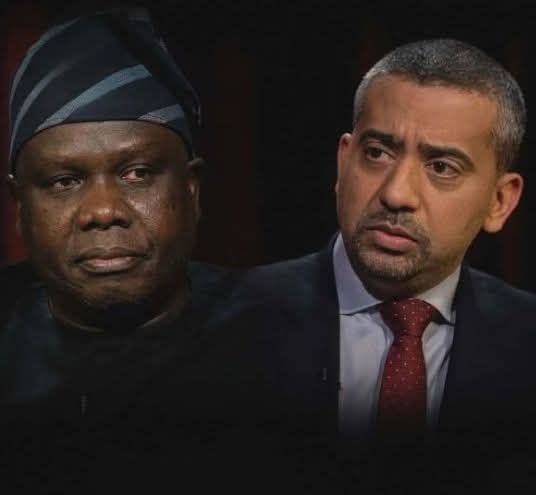
The encounter pitted Daniel Bwala, a vocal defender of President Bola Ahmed Tinubu’s administration, against the veteran journalist Mehdi Hasan, whose calm demeanour belied a razor-sharp preparation that turned the session into a masterclass in disciplined journalism.
What government loyalists anticipated as a triumphant showcase quickly unravelled into a humbling illustration of propaganda colliding head-on with unyielding facts, broadcast to an international audience unaccustomed to Nigeria’s style of political discourse. Unlike the chaotic domestic interviews where tempers flare, interruptions dominate, and facts serve merely as optional embellishments to fiery rhetoric, Hasan approached the exchange with meticulously compiled dossiers of statistics, public records, and Bwala’s own past statements.
His style was deceptively conversational, polite, at times even playful, yet relentlessly focused, redirecting every evasion back to the core questions without raising his voice.
In this arena, the facts themselves did the shouting, exposing the fragility of rehearsed talking points when subjected to rigorous scrutiny.
One recurring motif that has since gone viral was Bwala’s frequent invocation of “context” as a defensive shield whenever thorny issues arose, a tactic that might buoy a local panel discussion but faltered against Hasan’s smiling insistence on the raw data underpinning the claims.
The interview’s most meme-worthy moment arrived when Bwala raised a glass of water mid-exchange, perhaps intending a light-hearted gesture to ease the tension; instead, it crystallized for viewers worldwide a pause in which prepared narratives visibly struggled to match the probing questions. Beneath the surface amiability and shared laughter, Hasan methodically dismantled the defences, resurfacing intractable challenges like Nigeria’s deepening economic hardship, skyrocketing inflation eroding purchasing power, and the widespread suffering from sweeping economic reforms, issues that echo daily in the nation’s markets, factories, workplaces, and homes.
Far from neutralizing these pains, the interview amplified them on a global platform, potentially cementing for foreign observers the impression that if this represents the government’s strongest defence, the policies themselves must be perilously indefensible
Beyond the spectacle of one interview, the episode lays bare deeper systemic flaws in Nigeria’s political machinery, particularly the entrenched culture of appointments where unwavering loyalty trumps expertise, producing spokespersons honed in rhetorical brawls rather than policy depth, a combination that thrives locally but flounders internationally. Global journalism, as exemplified by Al Jazeera’s format, prizes preparation, precision, and credibility above all; when these are absent, even the most assured performer appears adrift.
For Nigerian viewers, the exchange offered a mix of schadenfreude and unease, the “context” sidesteps, the water-glass antics, and the laughter veiling incisive takedowns provided comic relief amid the discomfort—yet the broader ramifications demand serious reflection.
When representatives falter under such scrutiny, it tarnishes not just individuals but the very system that elevates them, mirroring a political culture more obsessed with narrative control than genuine problem-solving.
Ultimately, this Al Jazeera mirror has forced Nigerians to confront an unflattering reflection: a nation whose international image suffers from spokespersons ill-equipped for the world beyond propaganda. Restoring credibility, at home and abroad, requires transcending scripted briefings and empty bravado, pivoting instead toward leadership that confronts realities with honesty, competence, and tangible results.
That shift won’t emerge from press rooms or viral defences; it must be demanded by citizens weary of words without works.