


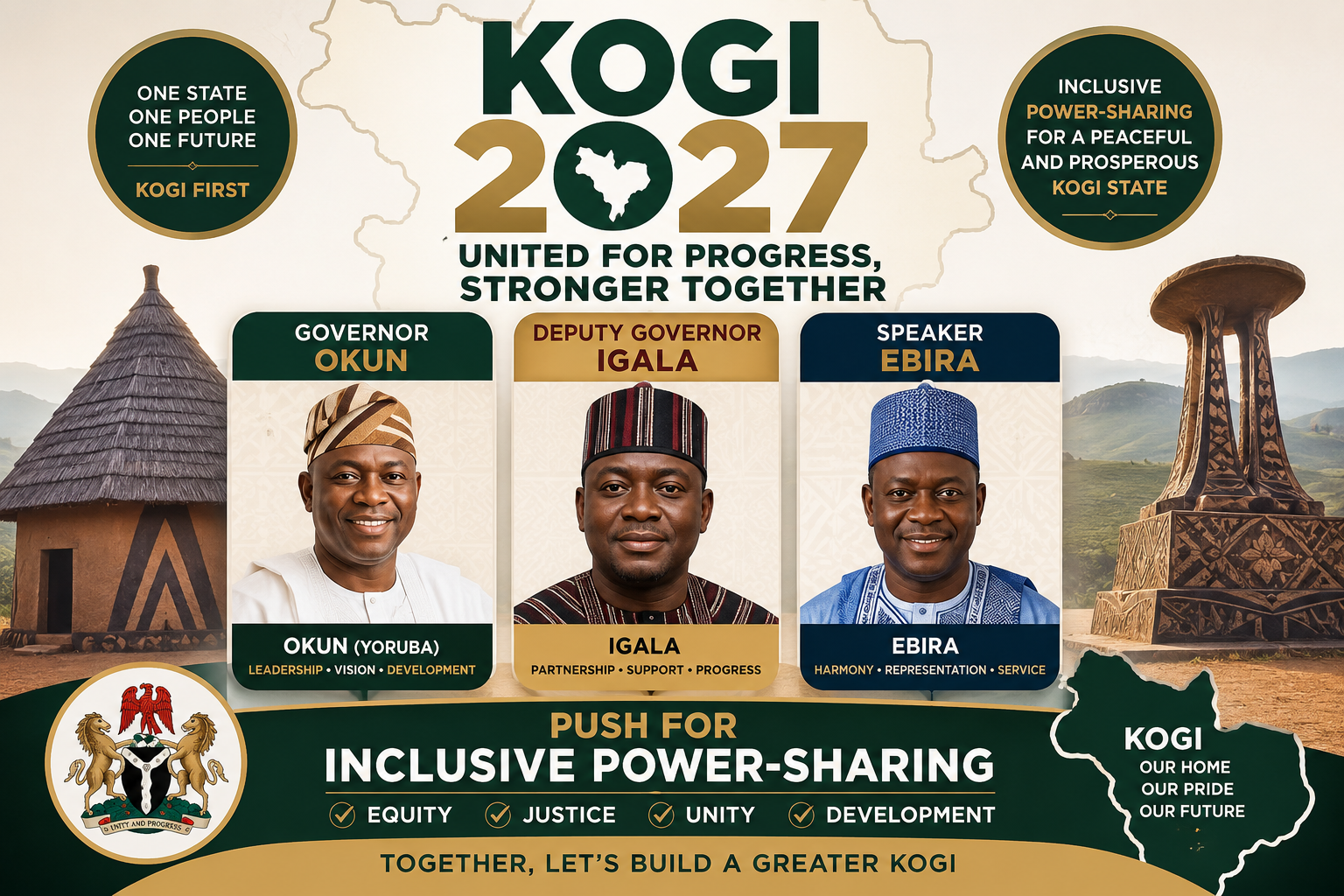
Kogi 2027: Group Predicts Okun Governor, Igala Deputy, Ebira Speaker in Push for Inclusive Power-Sharing
The consultations gradually gather momentum ahead of the 2027 governorship election in Kogi State, following some stakeholders and civic groups advocating an inclusive power-sharing arrangement aimed at promoting equity, stability and peaceful coexistence among the state’s major ethnic blocs.
Kogi State is home to three dominant ethnic groups—the Igala, the Okun (Yoruba-speaking) and the Ebira—alongside several other indigenous communities.
Since the return to democratic rule in 1999, debates over political inclusion and equitable representation have remained central to the state’s political discourse.
The group under Kogi unity headed by Chief Adeyemi F. Olusola, PhD, says the Okun has for long been neglected for only reasons known to God, demanding for equal rights for all Kogi citizens.
Supporters of the proposed arrangement argue that zoning the governorship to the Okun axis in 2027, with an Igala politician serving as deputy governor and an Ebira lawmaker emerging as Speaker of the Kogi State House of Assembly, would reflect the state’s diversity while fostering a stronger sense of belonging among its people.
According to proponents, such a political framework would not only promote fairness but also deepen public confidence in democratic institutions by ensuring that key leadership positions reflect Kogi’s multi-ethnic character.
Some analysts note that inclusive governance has often contributed to stability in diverse societies. They argue that when communities see themselves represented in leadership, it can strengthen cooperation, reduce political tension and encourage broader participation in governance.
Former PDP chieftain, who do not want his name in print, however, caution that any power-sharing arrangement should emerge through transparent consultations among political parties, community leaders, traditional institutions, youth and women groups, and the electorate.
He stress that competence, integrity and a clear development agenda should remain the primary considerations in selecting candidates.
As the 2027 election season approaches, discussions around zoning, equity and political inclusion are expected to intensify. While no major political party has officially adopted any power-sharing formula, advocates believe that sustained dialogue among stakeholders could help build consensus and preserve the state’s tradition of peaceful democratic competition.
For many residents, the ultimate expectation is that whoever emerges through a credible democratic process will prioritise good governance, economic development, security, infrastructure, education and improved welfare for all citizens, irrespective of ethnic or political affiliation.
Whether or not such a power-sharing proposal gains wider political acceptance, it has once again highlighted the importance of unity, mutual respect and inclusive leadership in shaping the future of Kogi State.


Comments are closed